
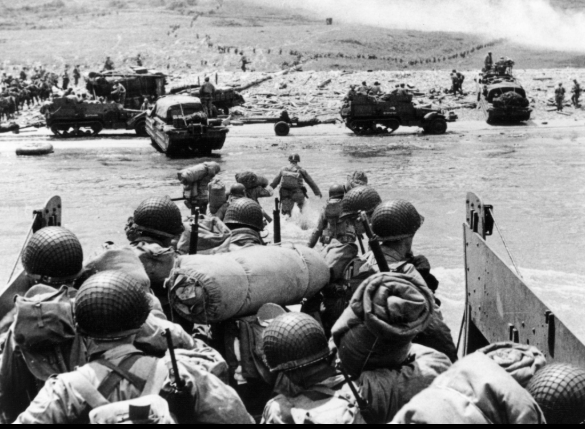
On the morning of June 6, 1944, thousands of American, British, and Allied troops crossed the English Channel and landed on the beaches of Normandy, France. The operation—better known as D-Day—became one of the largest amphibious invasions in military history and marked the beginning of the liberation of Western Europe from Nazi occupation. Normandy landings
Why Was D-Day So Dangerous?
The beaches were heavily defended with:
- Machine-gun bunkers
- Artillery positions
- Land mines
- Barbed wire
- Beach obstacles
As landing craft reached the shore, many soldiers came under intense fire before they could even leave their boats. Despite heavy losses, Allied troops fought forward and secured beachheads that allowed more forces to land.
The Price of Victory
The invasion came at a tremendous human cost. Thousands of Allied troops were killed, wounded, or missing on the first day alone. Yet the operation succeeded, creating the foothold needed for the Allied advance across France.
Why Historians Still Call It a Turning Point
Many historians consider D-Day one of the defining moments of World War II because it opened a major Western Front against Nazi Germany and accelerated the liberation of occupied Europe. Combined with Soviet advances in the east, it placed Germany under pressure from multiple directions.
The Legacy
More than 80 years later, D-Day is remembered as a symbol of courage, sacrifice, and international cooperation. Memorials, museums, and annual ceremonies continue to honor those who fought during the invasion.
SEO Title
The Battle That Changed America Forever: The Untold Story of D-Day
Meta Description
Discover how D-Day became one of the most important battles in U.S. military history. Learn why the Normandy invasion changed World War II forever.