
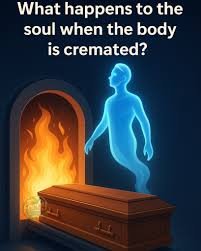
The body burns. The flames rise. And somewhere between grief and ash, one haunting question refuses to die: what is happening to the soul? Families watch the final goodbye, torn between faith, fear, and doubt. Some are certain the spirit is freed. Others wonder if the fire hurts, if the soul lingers, if it’s still at the create
Across traditions, the soul is almost always seen as something the fire cannot touch. In Hinduism, the body is a temporary garment and cremation is a sacred release; the soul is believed to move on, carried by divine order, not destroyed by heat. Buddhism treats the body as an impermanent vessel, with consciousness continuing its journey, shaped by karma rather than by the manner of death. In many Christian and Jewish communities, growing acceptance of cremation rests on the belief that God’s care for the soul is not limited by what happens to the body.
For those left behind, the ritual—whether flame or earth—serves the living as much as the dead. It marks a boundary between presence and memory, between holding on and letting go. The deepest comfort may be this: whatever the method of farewell, love, like the soul, is believed to outlast the body.