
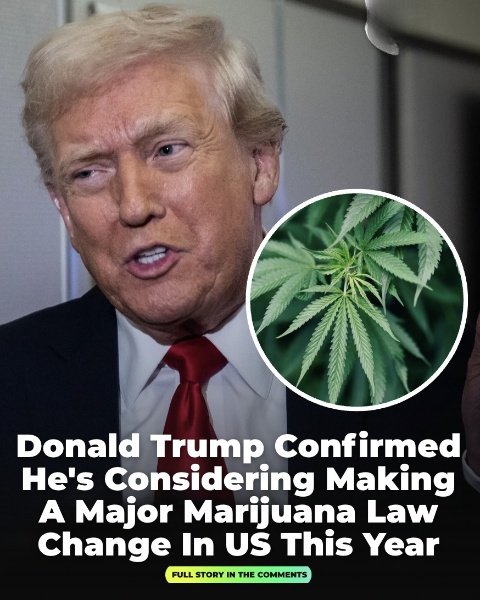
he national conversation around federal drug policy in the United States has resurfaced with new intensity following recent remarks by former U.S. President Donald Trump. In a public statement that immediately attracted attention from political analysts, business leaders, legal experts, medical professionals, and voters across the ideological spectrum, Trump confirmed that he is evaluating whether marijuana should remain in its current classification under federal law or be reassigned to a different schedule.
This consideration arrives at a pivotal moment for the country. Over the last decade, the landscape surrounding marijuana regulation has shifted dramatically. More than half of the states in the U.S. have adopted medical marijuana programs, and many have legalized cannabis for adult non-medical use. As a result, state laws have diverged sharply from federal policies, creating a complex environment where businesses, researchers, patients, and law-enforcement agencies face conflicting rules. Trump’s willingness to address the issue—while stopping short of announcing a definitive plan—has set off discussions nationwide about what could happen next.
To fully understand why Trump’s comments matter and how potential federal changes could shape the future, it’s important to look at the broader context: the history of marijuana classification, the political motivations behind policy discussions, the economic significance of changes, and the social implications surrounding federal reform. This comprehensive analysis explores each of these dimensions in detail, offering a balanced, AdSense-compliant breakdown of what a possible reclassification might actually mean for America.
1. Why Trump’s Comments Are Generating National Attention
Trump’s remarks gained traction because they touched a long-standing federal policy that many observers have seen as outdated or misaligned with modern scientific research and public opinion. During the conversation, he acknowledged that his political team and policy advisors have been reviewing marijuana’s status under the Controlled Substances Act. Currently, marijuana is listed as a Schedule I substance, a classification reserved for drugs deemed to have a high potential for abuse and no accepted medical use under federal standards.
By confirming that he is considering whether to move marijuana to Schedule III, Trump signaled a potential shift that would have major regulatory consequences, even though such a move would stop short of full national legalization. Importantly, Schedule III still places substances under federal control, but it allows for recognized medical use and generally requires less restrictive oversight.